بالعربي
Facebook Twitter Linkedin Youtube
Alafarika for Studies and Consultancy
Library
0

No products in the cart.

مكتبتنا (عربي)
  • Home
  • Reports
    • Geopolitics & Governance
    • Economy & Trade
    • Security & Conflict Resolution
    • Regional Integration & Global Cooperation
    • Education, Science & Technology
    • Culture & Media
  • Analyses
    • Geopolitics & Governance
    • Economy & Trade
    • Security & Conflict Resolution
    • Regional Integration & Global Cooperation
    • Education, Science & Technology
    • Culture & Media
  • Weekly Brief
  • Data
    • Charts
    • Infographics
  • Journals
  • Events
  • Country Profile
    • Nigeria
Font ResizerAa
Alafarika for Studies and ConsultancyAlafarika for Studies and Consultancy
Search
  • Home
  • بالعربي
  • Reports
    • Geopolitics & Governance
    • Economy & Trade
    • Security & Conflict Resolution
    • Regional Integration & Global Cooperation
    • Education, Science & Technology
    • Culture & Media
  • Analyses
    • Geopolitics & Governance
    • Economy & Trade
    • Security & Conflict Resolution
    • Regional Integration & Global Cooperation
    • Education, Science & Technology
    • Culture & Media
  • Weekly News Brief
  • Journals
  • Data
    • Infographics
    • Charts
  • Events
  • Country Profile
    • Nigeria
Follow US
  • About
  • Request A Report/Study
  • Consult With Us
  • Call to Host/Train
  • To Publish With Us
All Rights Reserved | Alafarika for Studies and Consultancy © 2026.
Education, Science & Technology

On Nigeria’s first solar-powered electric vehicle

Hammed J. Sulaiman
By
Hammed J. Sulaiman
Last updated: February 9, 2026
4 Min Read
Share

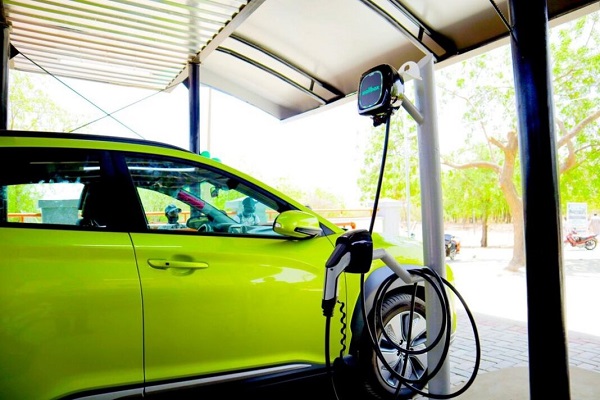
The Nigerian government through the National Automotive Design and Development Council (NADDC) on April 8, commissioned the first solar-powered Electric Vehicle (EV) charging station in Nigeria. It was commissioned at Usmanu Danfodiyo University in Sokoto (UDUS) as the station is a collaborative project between NADDC and UDUS.

It happened just a few months after the debut of the Hyundai KONA Electric, the country’s first locally built electric vehicle. But there are usually speculations that this could kill the oil economy and tone down gas and oil business despite the project being 100% renewable energy.

Nigeria— perhaps, Africa at large should know that this is energy generation through energy use, and there are zero emissions and waste. In fact, it was unveiled that three Nigerian universities partnered with NADDC: UDUS, University of Lagos, and University of Nigeria, Nsukka. This for sure will give birth to more fascinating research and development projects as students will be able to comprehend vehicle electrification and other related renewable energy technology in order to build better solutions for Nigeria or entire Africa.

This project, without a doubt, indicates that Nigeria is advancing to the level of a European automobile industry. It is worthy to note that Europe, Asia, and other foreign countries are transitioning from producing gasoline-powered vehicles to solar-powered vehicles.

In fact, more car firms that previously only built gasoline-powered vehicles have turned their focus to producing electric automobiles for everyday usage, with Tesla leading the way. Electric cars revolution shouldn’t be seen as a way of competition but as innovation. There are a lot of climate and air quality reasons to be using electric vehicles.

Electric vehicles have a number of advantages over internal combustion engines, including reduced fuel consumption. Experts agree that the costs of maintaining an electric vehicle are significantly lower. They have fewer moving parts, use fewer fluids to maintain, and are kinder on brake systems.

The future is here; this is the cheetah generation— and innovations are unavoidable. Electric vehicles are becoming increasingly common, and as the technology supporting electric vehicles (EVs) and batteries improve, problems such as high costs, limited range, performance issues, long charge times, and a scarcity of charging stations would become less of an issue.

Automobile giants like Volvo have stated their intention to convert to electric-only production in the near future, and even luxury electric vehicles like Tesla are providing more affordable options to the consumer, changing the public perception of electric cars as something only the wealthy can afford.

Sooner than later, we will have little chance of not going solar or electric. The world is evolving, and unfolding; electric cars are only signifying preparation for future generations at the instance of humanity.

But as the drawbacks of any new technology melt away, the decision to go EV or not to go EV will become the easiest this generation has to make. High cost, limited range, performance concerns, long charge time, and a lack of charging stats would be sorted out as major issues raised by technology doubters.

After obtaining independence from British colonialists in 1960, Nigeria has relied significantly on crude oil, but the country’s Department of Petroleum Resources, has forecasted the country’s crude oil reserves of 37 billion barrels, of which 2% is produced yearly, will be drained in 49 years. This means there should now be rooms for solution-based innovations, and Nigeria or Africa at large should sit tight.

Keywords:electric vehiclesInnovationRenewable energysolar power

Sign Up For Weekly Newsletter

Subscribe to our newsletter to get our weekly briefs, reports, and analysis instantly!

By signing up, you agree to our Terms of Use and acknowledge the data practices in our Privacy Policy. You may unsubscribe at any time.
Share This Article
Facebook Whatsapp Whatsapp LinkedIn Reddit Threads Email Copy Link Print
ByHammed J. Sulaiman
Educator, writer and legal researcher at Alafarika for Studies and Consultancy.

SUBSCRIBE NOW

Subscribe to our newsletter to get our weekly briefs, reports, and analysis instantly!

WHAT OTHERS ARE READING

Africa This Week (25/07/2026)

Weekly News Brief
July 25, 2026

How Legislative Term Extensions in 2026 Impact The Democratic Legacy of African States (A Case Study of Zimbabwe, the DRC, and Somalia)

The African continent has witnessed a quiet but significant shift in democratic norms within the…

July 21, 2026

Africa This Week (18/07/2026)

Sierra Leone hosted the 2026 ECOWAS Mid-Year Summit's statutory meetings, beginning with the 39th Administration…

July 18, 2026

Africa This Week (11/07/2026)

This Week, China pledged to deepen cooperation with Namibia across energy, agriculture, infrastructure and minerals…

July 11, 2026

From The Same Section

Situation ReportsRegional Integration & Global Cooperation

Ghana-South Africa Relations: A Review of the Diplomatic Fallout Amid Ongoing Xenophobia

A diplomatic rift has emerged between Ghana and South Africa, two of…

By
Ahmadulbadawy AbdulRaheem
July 11, 2026
Weekly News Brief

Africa This Week (04/07/2026)

The African Union convened an emergency meeting on Friday regarding its military…

By
Ahmadulbadawy AbdulRaheem
July 4, 2026
Weekly News Brief

Africa This Week (27/06/2026)

This week, the ECOWAS Court of Justice ruled that Togo’s recent constitutional…

By
Ahmadulbadawy AbdulRaheem
June 27, 2026

Discover More

Economic Diversification as a Strategy for Oil-Dependent African Economies in the Transition to Renewable Energy

Economy & Trade
April 22, 2026

How Solar Power is Supporting Kenya’s Efforts to Promote Green Energy

Education, Science & Technology
February 5, 2026

The Rise of Renewable Energy in Morocco

Education, Science & Technology
February 9, 2026

Africa This Week: Zimbabwe struggles to contain cholera outbreak; Comoros’ Supreme Court approved plans by incumbent President to run for another term; Opposition parties in DR Congo’s presidential election ask court to force electoral commission to publish final voter roll; Cameroon receives Mosquirix malaria vaccine; Nigeria and Germany sign two agreements on renewable energy and gas exports, and others

Weekly News Brief
November 26, 2023
Registered and Certified by:

Follow us: 

Other Pages

  • About
  • Request A Report/Study
  • Consult With Us
  • Call to Host/Train
  • To Publish With Us

Quick Links

  • Events
  • Library
  • Journals
  • Privacy Policy
  • Contact
All Rights Reserved | Alafarika for Studies and Consultancy © 2026.
Get Updated!
Subscribe to our newsletter and never miss our latest reports, analyses, publications, and other events.

Zero spam, Unsubscribe at any time.
Welcome Back!

Sign in to your account

Username or Email Address
Password

Lost your password?